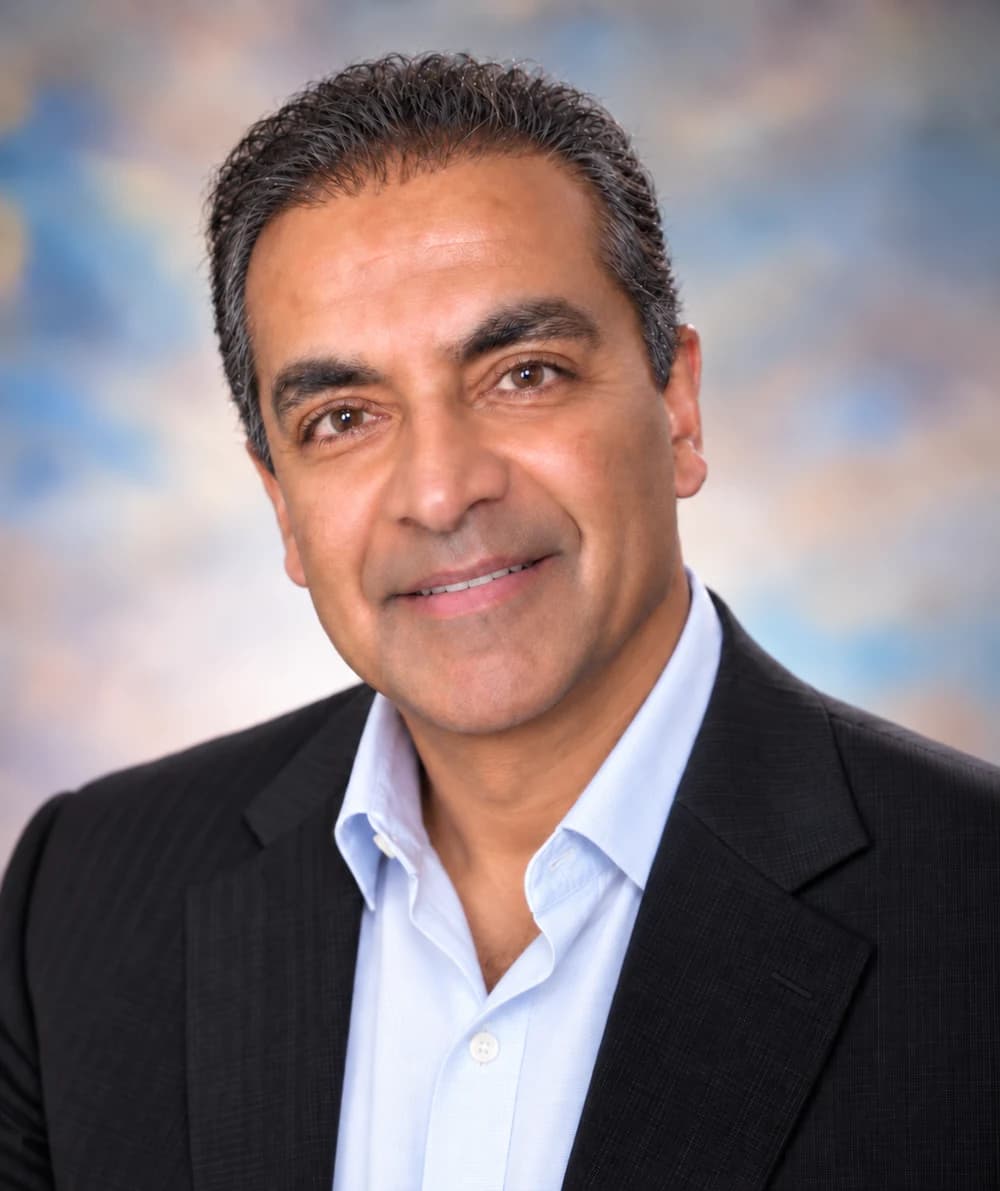
Steven S. Mehta, MD
The Origin
Steven Mehta grew up in a household where medicine wasn't a career choice so much as a shared language. His father practiced. His two sisters followed. Conversations at the dinner table wandered between clinical reasoning and weekend plans without changing register.
Music shaped him in parallel. Years of listening, playing, and developing the kind of attention ensemble work rewards. The discipline turned out to be unexpectedly clinical — a physician listening to a patient is doing the same work as a musician listening for the part beneath the melody.
I trained to listen to ensembles. Then I trained to listen to bodies. The disciplines turned out to be the same.
Medical school. Residency in internal medicine, where the systemic thinking that would define his later work first took shape. Then fellowship at Arizona Heart Institute — a program known for the most technically demanding procedures in cardiovascular medicine, the kind that don't forgive imprecision.
He came out of it a cardiologist who could see the inside of a coronary artery as clearly as the outside of a chart.
The cath lab years that followed were the formative chapter. He served as Director of Cardiovascular Intervention, then as Chief of Medical Staff and Chief Medical Officer — leadership roles that asked him to shape institutional culture as much as practice medicine.
He treated thousands of patients with advanced atherosclerotic disease. He placed stents, opened arteries, and saved lives in acute crisis. He was, by any measure, doing the work he was trained to do.
Every patient who arrived in my cath lab had decades of warning signs. Almost no one had been listened to early enough.
An invitation to teach in China widened the lens further. He saw systems-level thinking about health, prevention as infrastructure rather than afterthought, and integrative philosophies that — while not always translatable to evidence-based practice — clarified what the American system had stopped asking.
The experience didn't change his clinical foundation. It changed what he wanted to build with it.
Oasis Longevity is the answer he arrived at. Not a wellness center. Not a biohacking clinic. Not a functional medicine practice.
A physician-led longevity program grounded in the cardiovascular science he spent decades mastering — built for patients who want their care designed around the long arc of their lives instead of the arrival of the next emergency.
Interested in joining our practice? We'd welcome your inquiry.
Join Our PracticePhilosophy
Waiting for disease is the wrong model. Conventional medicine is engineered to intervene after damage is done — efficient at acute care, structurally indifferent to slow decline. Longevity medicine intervenes while the body still has the capacity to change course. That earlier window is where the real leverage lives.
Cardiovascular health isn't one category among many. It is the operating system. Vascular integrity underpins cognition, metabolic function, sexual health, physical performance, and cellular aging. When the cardiovascular system deteriorates, everything downstream follows — which is why the depth of cardiology training behind a longevity protocol matters far more than the surface of it suggests.
The physician–client relationship is the intervention. No protocol works without a physician who knows the patient deeply enough to adapt it as life unfolds. This is why Dr. Mehta works with a limited number of clients at any one time. Depth over volume — every protocol revision is a personal decision, not an algorithmic one.
The Career
Undergraduate education in Ohio — the start of a long path through medicine.
Medical school and Internal Medicine residency — the rigor that shapes every clinical instinct.
University of Louisville. The foundation of his cardiology training.
Arizona Heart Institute. Trained in the most technically demanding procedures in cardiovascular medicine.
Years on the front line of advanced atherosclerotic disease.
Hospital-system leadership. Responsibility for the quality and culture of cardiovascular care.
Elected to lead the American College of Cardiology — Arizona Chapter.
Named to the Top Doctors list by peer nomination — recognition awarded by other physicians.
Founded a physician-led longevity practice grounded in cardiovascular science.
Beyond Medicine
Music is still part of the daily picture — he plays bass guitar in local bands, listens with intent, and pays attention to ensembles in the way that first taught him how to be present. He says the discipline of music made him a better physician.
He and his wife have twin daughters. The family skis together, keeps a small menagerie of animals at home, and applies the same principles to their own health that Dr. Mehta asks of his patients — not because he has to, but because the model works in both directions.
Outside of clinic and family, the throughline is the same: a quiet curiosity about how systems work, what they need to keep working, and what gets in the way.
